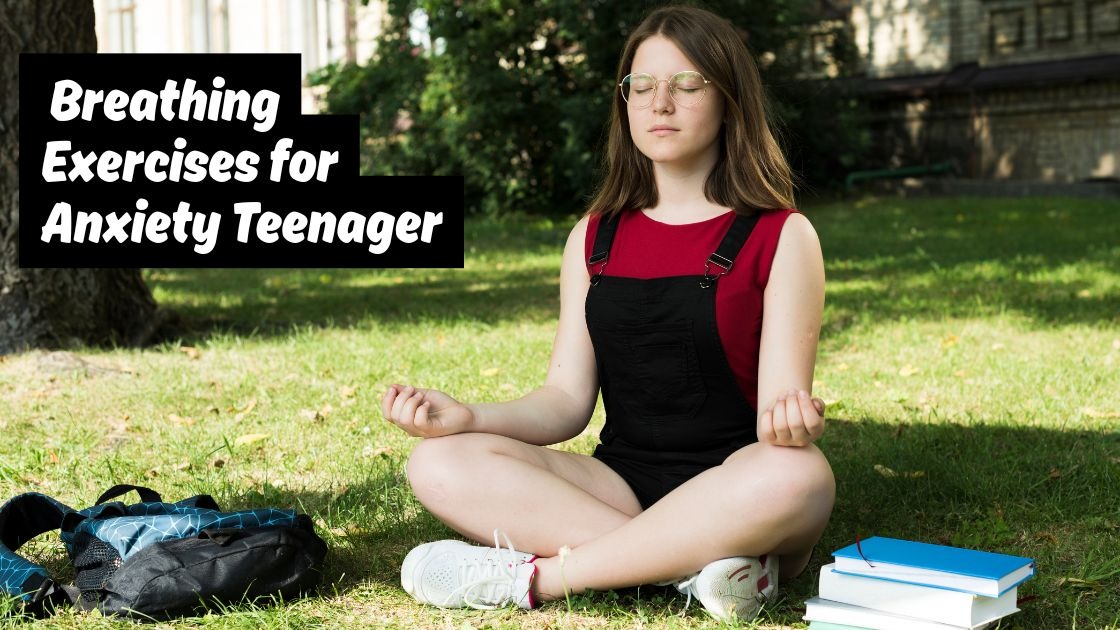
Breathing exercises for anxiety in teenagers a rapid, drug-free way to interrupt the body’s stress response. By engaging the vagus nerve through slow, intentional breath patterns, these techniques shift the nervous system from a state of alarm into one of recovery lowering heart rate, easing muscle tension, and quieting racing thoughts within just a few minutes. They require no equipment, no appointment, and no one else in the room.
Teen anxiety has become alarmingly widespread. According to the National Survey of Children’s Health, diagnosed anxiety among U.S. adolescents aged 12–17 surged 61% between 2016 and 2023, climbing from 10% to 16.1%. The National Institute of Mental Health (NIMH) estimates that 31.9% of teenagers will meet the criteria for an anxiety disorder during adolescence, with girls facing disproportionately higher rates (38%) than boys (26.1%).
With numbers that steep, young people need coping strategies they can access the moment worry spikes not weeks later when a therapy slot opens. Controlled breathing fits that gap. A 2023 meta-analysis in Scientific Reports (Nature), spanning 12 randomized controlled trials, found that structured breathwork produced significantly lower self-reported stress, anxiety, and depressive symptoms compared to control conditions.
This guide covers the specific techniques that research supports for adolescents, the biology that explains their effectiveness, and actionable advice for making breathwork a lasting habit.
Table of Contents
Why Do Breathing Exercises For Anxiety In Teenagers?
Controlled breathing calms teenage anxiety by acting directly on the autonomic nervous system the internal wiring that governs heart rate, digestion, and the fight-or-flight response without any conscious effort.
During an anxious episode, the sympathetic branch of that system takes the wheel. Breaths turn shallow and fast, muscles brace, and cortisol surges into the bloodstream. Deliberate, paced breathing flips that switch by stimulating the vagus nerve, which hands control back to the parasympathetic branch the body’s built-in recovery mode.
Here is the chain reaction that unfolds when a teenager practices structured breathing:
- Longer exhales activate the vagus nerve This cranial nerve runs from the brainstem to the abdomen. When stimulated by extended out-breaths, it sends a direct signal to slow the heartbeat and lower blood pressure.
- The brain receives an “all clear” signal As heart rate drops, the brain scales back cortisol production because the perceived threat no longer matches the body’s calmer physical state.
- Higher-order thinking returns With the stress alarm quieted, the prefrontal cortex responsible for reasoning, planning, and emotional regulation comes back online, replacing reactive panic with clearer judgment.
- Physical tension unwinds Deep breaths that engage the diaphragm mechanically release tightness in the chest, shoulders, neck, and jaw, which are the most common areas where adolescents store stress physically.
A 2025 systematic review in MDPI Children evaluated 13 studies involving diaphragmatic breathing among young people aged 6–18. The findings confirmed that slow, deep breathing served as a practical complementary tool for reducing stress and anxiety in pediatric and adolescent populations. Notably, student participants consistently described the practices as easy to pick up, genuinely helpful, and realistic enough to apply during everyday situations.
What Makes a Breathing Technique Teen-Friendly?
A breathing exercise can be backed by excellent science and still fail with teenagers if it feels awkward, takes too long, or demands too much setup. The techniques that actually get adopted by adolescents share three non-negotiable traits:
- Speed Adolescents encounter anxiety in live, high-pressure windows: right before an exam, during a tense group conversation, or mid-panic at 2 a.m. If a technique cannot deliver a noticeable shift within two to five minutes, most teens will abandon it.
- Invisibility No teenager wants to draw peer attention by performing a conspicuous wellness ritual in a crowded hallway. The most effective exercises for this age group can be done silently, eyes open, without anyone else noticing.
- Low learning curve A feasibility pilot published in PMC (Frontiers in Psychology) studied high school seniors in a slow-breathing curriculum and found that students rated the exercises as tolerable and genuinely useful but only when instructions were clear and the methods were uncomplicated. Complexity killed consistency.
Real-world data backs this up. A 2025 study in Personality and Individual Differences (ScienceDirect) enrolled 8th-graders preparing for a high-stakes national exam in an 8-week breathing program. Average test anxiety scores fell by 5.05 points a statistically significant shift achieved through simple diaphragmatic exercises performed in a regular classroom setting. Elaborate protocols were not required; straightforward practice delivered measurable relief.
7 Breathing Exercises for Anxious Teenagers
The techniques below are arranged from most intuitive to most structured so that any teenager can begin with whichever method feels most natural and progress from there. Every exercise works at a school desk, in the backseat of a car, or lying in bed with the lights off.
1. Box Breathing (4-4-4-4 Method)
Box breathing pairs equal-length inhales, holds, and exhales into a four-phase rhythm that gives an anxious mind a concrete focal point breaking the cycle of spiraling thoughts.
How to do it:
- Draw air in through the nose for a slow count of 4
- Pause and hold gently for 4 counts
- Release the breath through the mouth over 4 counts
- Hold with lungs empty for 4 counts
- Complete 4 full rounds
The symmetrical structure creates a mental anchor. Each phase demands just enough concentration to crowd out worry without feeling meditative or strange. This same method is standard training for military operators and emergency responders a context that often makes it more appealing to teenagers than techniques framed around mindfulness or spirituality.
Best for: Pre-test jitters, steadying nerves before walking into a social situation, regaining composure after a confrontation.
2. The 4-7-8 Technique
Created by integrative medicine physician Dr. Andrew Weil, this method front-loads the exhale phase, making it substantially longer than the inhale. That asymmetry is deliberate research consistently links extended out-breaths to stronger parasympathetic activation and faster onset of physical relaxation.
How to do it:
- Breathe in gently through the nose for 4 counts
- Hold the breath for 7 counts
- Exhale fully through the mouth for 8 counts (a soft whoosh is optional)
- Repeat for 3–4 rounds
Because the exhale lasts twice as long as the inhale, the body decelerates more dramatically than with equal-phase patterns. Many teens report feeling noticeably drowsy after just two cycles, which makes this technique especially suited to nighttime use.
Best for: Sleep-onset anxiety, lying awake with racing thoughts, calming down after an intense emotional episode.
3. Belly Breathing (Diaphragmatic Breathing)
Most teenagers include default to shallow chest breathing when stressed, which only reinforces the body’s alert state. Belly breathing retrains that pattern by directing airflow down toward the diaphragm, the large dome-shaped muscle beneath the lungs. Engaging the diaphragm pulls a fuller volume of air into the lower lung regions, where gas exchange is most efficient, and triggers the relaxation response more reliably than upper-chest expansion.
How to do it:
- Inhale through the nose, guiding the breath downward so the stomach pushes outward while the chest stays mostly still
- Exhale through the mouth, letting the stomach gently deflate
- Repeat for 5–10 full breath cycles
The two-hand placement serves as a built-in biofeedback tool. A teenager can immediately feel whether the breath is landing in the right place, eliminating guesswork and making it possible to self-correct without guidance from a teacher or therapist.
4. Five-Finger Breathing
Five-finger breathing adds a tactile, visual dimension to breathwork that makes it especially effective for teens who struggle to focus on breath alone. As Dr. Jud Brewer, director of research and innovation at Brown University’s Mindfulness Center, explains through Sharecare, this method engages sight, touch, and breath simultaneously occupying enough mental bandwidth to crowd out anxious spiraling.
How to do it:
- Spread one hand out with fingers apart
- With the index finger of the opposite hand, trace up the outside of the thumb while breathing in
- Trace down the other side of the thumb while breathing out
- Continue tracing up and down each finger inhale going up, exhale going down
- After all five fingers, reverse direction back toward the thumb
According to the Cleveland Clinic, the multisensory engagement triggers the release of endorphins and guides the brain into a state of deep relaxation that single-channel breathing methods sometimes cannot achieve alone.
Best for: Teens who find pure breathwork boring, anxiety during school when subtlety matters (fingernail-pressing variation), younger adolescents who benefit from a physical anchor.
5. Straw Breathing
Straw breathing forces a longer, slower exhale by restricting airflow through pursed lips mimicking blowing through a narrow straw. The restricted exhale naturally extends the out-breath phase without requiring a teenager to count or time anything.
How to do it:
- Inhale normally through the nose
- Purse the lips as though holding a thin straw
- Exhale slowly and steadily through the tiny opening aim for a breath that lasts 6–8 seconds
- Repeat for 6–8 breath cycles
This technique is useful for teens who feel restricted or claustrophobic during breath-holds. It delivers the calming benefits of extended exhalation without the sensation of holding air inside the lungs.
Best for: Panic-prone teens who dislike breath-holding, quick regulation between class periods, calming down before or after physical activity.
6. Counted Breathing (5-5 Method)
Counted breathing strips the practice down to its most essential form: a matched inhale and exhale of equal length, with nothing else to track.
How to do it:
- Breathe in through the nose for a slow count of 5
- Breathe out through the mouth for a slow count of 5
- Repeat for 2–3 minutes
The simplicity is the point. For teenagers who feel overwhelmed by multi-step techniques or uncomfortable with breath-holds, counted breathing offers a low-friction entry point that still delivers rhythmic regulation of the nervous system.
Best for: First-time breathers, teens who feel overwhelmed by complex methods, a reliable everyday baseline practice.
7. Alternate Nostril Breathing
Alternate nostril breathing originates from yogic pranayama traditions and involves breathing through one nostril at a time. It requires slightly more coordination than other methods, making it better suited for teens who have already practiced simpler techniques and want a more focused exercise.
How to do it:
- Close the right nostril with the right thumb
- Inhale slowly through the left nostril for 4 counts
- Close the left nostril with the right ring finger, release the right nostril
- Exhale through the right nostril for 4 counts
- Inhale through the right nostril, then switch and exhale through the left
- Complete 5 full rounds
This technique requires enough concentration to fully absorb a teenager’s attention, which makes it particularly effective for persistent worry loops that resist less engaging methods.
Best for: Teens who already practice breathwork regularly, quiet moments at home or before bed, managing rumination and repetitive anxious thoughts.
How to Build a Breathing Habit That Sticks
Knowing a technique is one thing. Actually using it when anxiety strikes is another. The gap between learning and applying breathwork closes faster when the practice becomes a predictable part of a teenager’s daily routine rather than an emergency-only tool.
- Attach it to an existing habit Pair breathing with something a teen already does every day: five breaths before brushing teeth, one box breathing cycle before opening the phone in the morning, or a 4-7-8 round before lights out. Habit stacking removes the need for willpower.
- Start absurdly small One round of box breathing takes under 30 seconds. Committing to a single cycle per day eliminates the resistance that comes with longer meditation-style sessions.
- Track it visually A simple streak tracker on a phone notes app or a row of check marks on a sticky note provides the small dopamine hit of visible progress that keeps adolescents engaged.
- Practice when calm first As Suzanne Silverstein, founding director of Cedars-Sinai’s Share & Care program, advises, teens are far more likely to reach for a breathing technique during a crisis if they have already rehearsed it during relaxed moments. Practicing only during panic makes the method feel like part of the panic itself.
When Breathing Exercises Are Not Enough
Breathwork is a powerful self-regulation tool, but it is not a substitute for professional treatment when anxiety becomes severe or persistent. A teenager should be connected with a mental health professional if:
- Anxious feelings persist for several weeks without improvement despite consistent self-help efforts
- Worry interferes with school attendance, academic performance, friendships, or sleep on a regular basis
- Physical symptoms like chest tightness, nausea, or headaches become frequent companions to anxiety
- The teen begins avoiding everyday situations declining invitations, skipping school, or withdrawing from activities they once enjoyed
- Panic attacks occur repeatedly or feel uncontrollable
As the Raising Children Network (Australia) notes, anxiety disorders respond very well to professional treatment, and the earlier they are addressed, the less likely they are to affect long-term development. A pediatrician, school counselor, or licensed therapist specializing in adolescents can determine whether cognitive behavioral therapy, medication, or a combination is the right next step.
If a teenager is in crisis, the 988 Suicide & Crisis Lifeline (call or text 988) provides immediate, confidential support around the clock.
Key Takeaways
Breathing exercises give anxious teenagers an immediate, portable, and evidence-backed way to calm their nervous system whether the trigger is a looming exam, a social situation, or a 2 a.m. thought spiral. The seven techniques in this guide range from beginner-friendly counted breathing to more advanced alternate nostril work, so every teen can find a method that matches their comfort level and lifestyle.
The research is consistent: structured breathwork reduces self-reported anxiety, lowers physiological stress markers, and can be learned by adolescents in a single session. The key to long-term benefit is regular practice during calm moments so the skill is automatic when stress peaks.
Start with one technique tonight. Even a single 60-second round of box breathing before bed can begin rewiring how a teenager’s body responds to stress.
Know a teen who could use these tools? Share this guide with a parent, teacher, or friend or save it to revisit whenever anxiety needs a reset.
Frequently Asked Questions
What is the best breathing exercise for a teenager with anxiety?
Box breathing (4-4-4-4) is widely considered the most effective starting point for anxious teens because its equal-phase structure is simple to remember and works within 60 seconds. Teens who struggle mainly with sleep-related anxiety may prefer the 4-7-8 technique, which emphasizes a longer exhale that promotes drowsiness.
How quickly do breathing exercises reduce anxiety?
Most controlled breathing techniques begin to lower heart rate and ease tension within one to two minutes of consistent practice. A full five-minute session can produce a measurable shift in both subjective mood and physiological stress markers like cortisol and blood pressure.
Can breathing exercises replace therapy or medication for teen anxiety?
Breathing exercises are a valuable self-regulation tool, but they are not a replacement for professional treatment when anxiety is persistent, severe, or interfering with daily functioning. They work best as one component of a broader strategy that may include therapy, lifestyle changes, and when recommended by a clinician medication.
How often should a teenager practice breathing exercises?
Daily practice produces the strongest results. Even one to two minutes each morning or before bed is enough to build the habit. Research from a 2025 study in MDPI Children found that adolescents who practiced diaphragmatic breathing consistently over several weeks reported the most significant reductions in stress and anxiety.
Are breathing exercises safe for all teenagers?
For the vast majority of teens, controlled breathing is completely safe. However, some adolescents particularly those with panic disorder may find that focusing intently on their breath temporarily increases awareness of physical sensations and triggers discomfort. If this occurs, switching to a distraction-based technique like five-finger breathing or consulting a therapist for guided support is recommended.
Can parents practice breathing exercises with their teenagers?
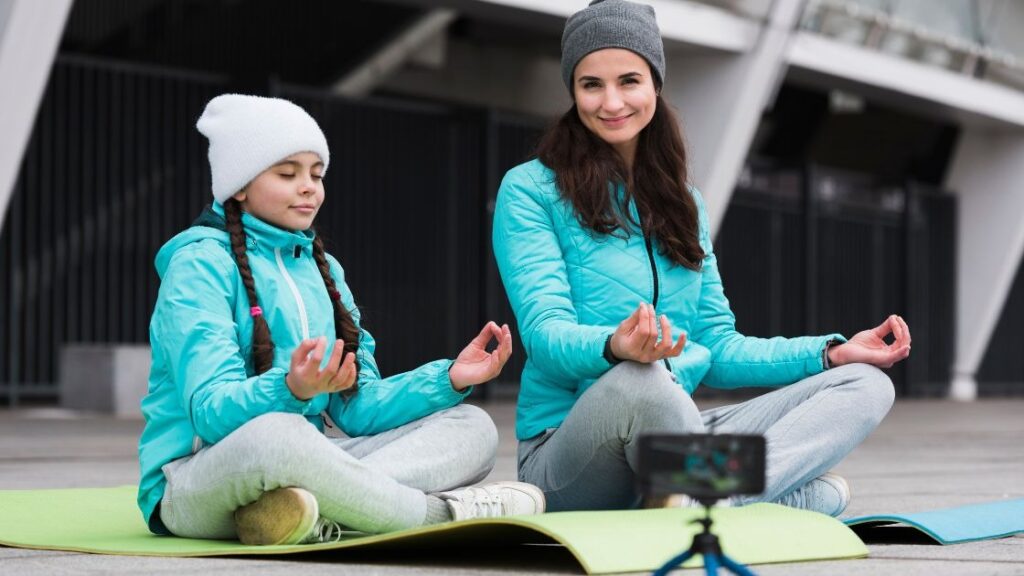
Practicing together is one of the most effective ways to normalize breathwork and remove any stigma a teen might attach to it. As Cedars-Sinai recommends, families who make breathing a shared routine before meals, during car rides, or at bedtime see higher adoption rates than when the teen is expected to practice alone.