
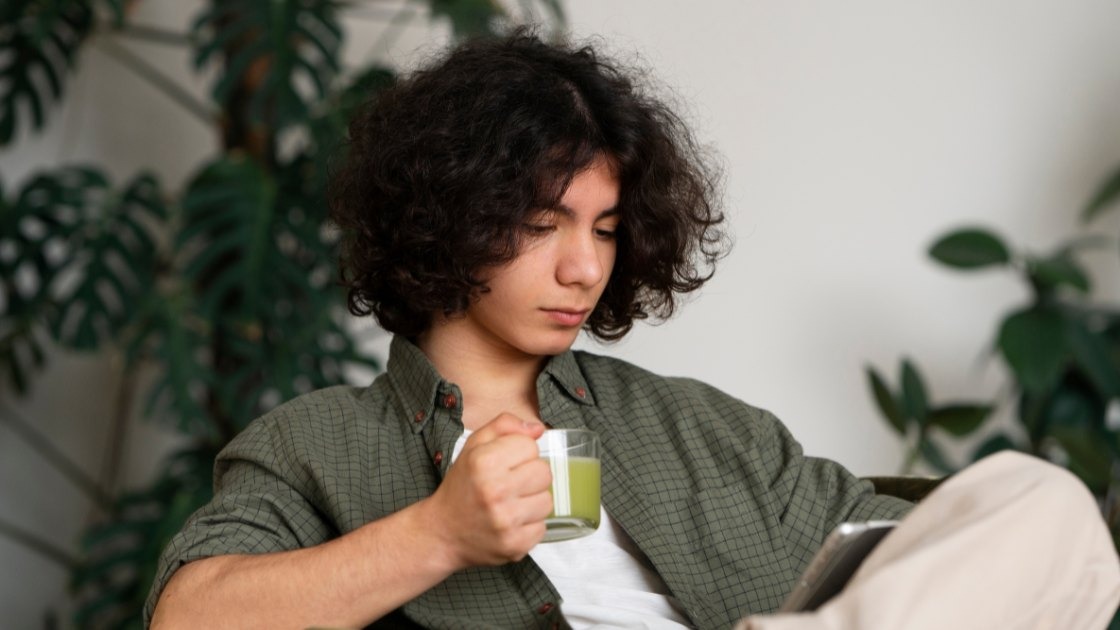
Matcha for depression has moved from folk remedy territory into the realm of serious scientific investigation and the findings so far are genuinely encouraging. This bright green tea powder contains a rare cocktail of brain-active compounds that target multiple pathways involved in depressive disorders, from dopamine signaling to neuroinflammation.
Here is the direct answer you came for: yes, peer-reviewed research indicates that matcha tea has measurable antidepressant-like properties. A 2023 study from Kumamoto University, published in Nutrients, demonstrated that matcha activated the dopaminergic system in stress-susceptible animal models, reducing depression-like behavior through the same neural pathways disrupted in human depressive disorders.
That said, matcha is not a standalone treatment for clinical depression. It functions best as a complementary approach something you incorporate alongside therapy, medication, or other professional support. With the World Health Organization estimating that roughly 332 million people globally live with depression, the search for safe, accessible, evidence-informed mood support has become more urgent than ever.
This guide walks you through every piece of credible evidence connecting matcha to mental health including the specific compounds responsible, how they interact with your brain, what dosage the research supports, and where the current science reaches its limits.
Table of Contents

Why Matcha Stands Apart From Ordinary Green Tea for Mental Wellness
Matcha is not just a trendy version of green tea its chemical composition is fundamentally different, and that distinction matters enormously when discussing mental health benefits.
When you brew a standard cup of green tea, you steep leaves in hot water and then discard them. With matcha, you consume the entire stone-ground leaf dissolved in liquid. This means your body absorbs the full spectrum of bioactive compounds present in the plant not just the fraction that leaches out during steeping.
Three compounds make matcha particularly relevant for depressive symptoms and emotional balance:
L-theanine is a rare amino acid found almost exclusively in Camellia sinensis tea plants. Shade-grown matcha leaves accumulate dramatically higher L-theanine concentrations than sun-grown green tea in some cases, up to five times more. L-theanine directly influences neurotransmitter activity in the brain and promotes alpha brainwave patterns associated with relaxed focus.
EGCG (epigallocatechin gallate) is a powerful polyphenolic antioxidant capable of crossing the blood-brain barrier. A review published in Exploration of Neuroscience confirmed that EGCG can directly interact with neural tissue, reduce neuroinflammation, and stimulate brain-derived neurotrophic factor (BDNF) a protein critical for neuronal survival and mood regulation.
Caffeine in matcha operates differently than in coffee. Because L-theanine modulates the stimulant’s effects, matcha delivers sustained alertness without the cortisol spike, jitters, or energy crash that coffee often triggers.
| Compound | Key Mental Health Function | Matcha vs. Standard Green Tea |
| L-theanine | Boosts GABA, serotonin, and dopamine; promotes alpha waves | Up to 5x more concentrated in matcha |
| EGCG | Crosses blood-brain barrier; reduces neuroinflammation; raises BDNF | Approximately 3x higher in matcha |
| Caffeine | Sustained focus and energy (modulated by L-theanine) | Moderately higher in matcha |
This triple-compound synergy is what separates matcha from every other tea variety when it comes to mood and emotional resilience.
How Matcha Activates Your Brain’s Dopamine Pathways
Matcha appears to fight depressive symptoms partly by waking up the brain’s dopamine circuits the very system that goes quiet during depressive episodes.
The Kumamoto University research team (Kurauchi et al., 2023) explored this mechanism by giving matcha to two genetically distinct groups of mice one bred to be vulnerable to stress, the other naturally resilient. After a period of social isolation designed to mimic chronic stress, the stress-vulnerable mice receiving matcha showed dramatically less depression-like behavior compared to controls.
Brain tissue analysis uncovered three critical findings:
- Neural activity surged in the prefrontal cortex (PFC), the region governing emotional processing, decision-making, and impulse control all of which deteriorate during depression.
- Increased activation appeared in the nucleus accumbens (NAc), a key hub in the brain’s reward and motivation circuit that regulates feelings of pleasure and purpose.
- Blocking the dopamine D1 receptor completely eliminated matcha’s antidepressant-like effect proving that dopamine signaling was the central mechanism at work.
As Neuroscience News reported, lead researcher Dr. Yuki Kurauchi explained that matcha reduced depressive behavior specifically in subjects already experiencing elevated stress, and that the effect depended on the individual’s prior mental state. This finding suggests that matcha may be most beneficial for people currently under chronic psychological pressure exactly the population most at risk for developing depression.
These results are preclinical, meaning they come from animal models rather than human trials. However, the dopaminergic circuit identified (PFC-NAc-VTA) is the identical pathway implicated in human major depressive disorder, which gives these findings significant translational relevance.
L-Theanine and Depression: The Calming Amino Acid in Every Cup
L-theanine is the single most researched mood-relevant compound in matcha, and the evidence for its mental health benefits continues to strengthen with each new trial.
After oral consumption, L-theanine crosses the blood-brain barrier within approximately 30 to 60 minutes, as documented in a review published in Food Science and Human Wellness. Once inside the brain, it simultaneously influences multiple neurotransmitter systems that regulate emotional states.
A 2019 randomized, placebo-controlled trial published in Nutrients tested the effects of 200 mg of daily L-theanine on 30 healthy adults over a four-week period. The participants receiving L-theanine rather than the placebo experienced statistically significant drops in depression scores on the Self-rating Depression Scale (p = 0.019), trait anxiety on the STAI inventory (p = 0.006), and sleep disturbance on the Pittsburgh Sleep Quality Index (p = 0.013). These participants also showed improved verbal fluency and executive function.
A comprehensive review in Pharmacological Research analyzing multiple human studies concluded that L-theanine taken at daily doses between 200 and 400 mg consistently produces anxiety-reducing and stress-lowering effects, with benefits appearing both acutely (within hours) and over longer supplementation periods of up to eight weeks.
Here is what L-theanine does at the neurochemical level that directly relates to depressive disorders:
It elevates GABA levels, the brain’s primary inhibitory neurotransmitter responsible for calming overactive neural circuits. It increases serotonin production, the chemical most closely associated with stable mood and emotional equilibrium. It enhances dopamine output, counteracting the motivational deficit that characterizes depression. And it promotes alpha brainwave patterns the same electrical signature seen during meditation, deep relaxation, and creative flow states.
A single serving of high-quality ceremonial matcha provides roughly 20 to 30 mg of L-theanine. People who drink two to three cups daily approach the lower end of clinically studied dosages, potentially gaining real neurochemical benefits from their daily habit.
EGCG: The Neuroprotective Shield Behind Matcha’s Mental Health Benefits
Beyond L-theanine and caffeine, matcha’s EGCG content may offer the deepest long-term protection for brain health and emotional resilience.
EGCG is not just an antioxidant it is a multi-target neuroprotective agent. A study published in Neurochemical Research found that EGCG administration significantly reversed depression-like behavior in chronically stressed mice. The mechanism involved two parallel actions: EGCG reduced circulating levels of interleukin-1β (a pro-inflammatory marker elevated in depression) while simultaneously boosting BDNF gene expression in the hippocampus.
BDNF is often called the brain’s “growth fertilizer.” Its levels consistently drop in people diagnosed with major depressive disorder. Most conventional antidepressants including SSRIs like fluoxetine and sertraline work partly by restoring BDNF to healthier levels. The fact that EGCG achieves a similar outcome through an entirely different biological pathway opens the door to potential complementary therapeutic strategies.
Additionally, a preclinical investigation published in RSC Pharmaceutics revealed that EGCG inhibits monoamine oxidase-A (MAO-A) the enzyme that breaks down serotonin, dopamine, and norepinephrine in the brain. By slowing MAO-A activity, EGCG helps these critical mood-regulating neurotransmitters remain active for longer periods. This mechanism mirrors, in principle, how an older class of antidepressants (MAO inhibitors) works though at a much milder, food-based level.
Because you consume the entire ground leaf, matcha delivers a substantially higher EGCG dose per serving than brewed green tea roughly three times more making it the most potent widely available dietary source of this neuroprotective compound.
Matcha and Cortisol: Calming the Stress Hormone That Fuels Depression
Chronic stress is one of the most reliable triggers for depressive episodes, and cortisol the body’s primary stress hormone sits at the center of that connection.
Sustained high cortisol disrupts sleep architecture, suppresses immune function, impairs memory, and directly damages neurons in the hippocampus. Over time, this creates a biochemical environment where depression thrives. A clinical trial published in Nutrients (Unno et al., 2018) investigated matcha’s stress-reducing function in both animal models and human participants. The researchers found that matcha with high theanine-to-caffeine ratios produced significant stress reduction but only when the molar ratio of caffeine and EGCG to theanine and arginine remained below two.
This finding carries a practical implication: not all matcha products are equally effective for mood support. The study found that approximately 42% of matcha sold in Japan met the compositional threshold for meaningful stress reduction, while only a small fraction of matcha marketed overseas qualified. High-quality ceremonial-grade matcha, shade-grown for at least three weeks before harvest, consistently contains the favorable amino acid ratios needed for genuine cortisol-modulating benefits.
The Gut-Brain Axis: An Emerging Frontier for Matcha and Mood
Roughly 90% of the body’s serotonin the neurotransmitter most associated with mood stability is produced in the gastrointestinal tract, not the brain. This fact has propelled gut-brain axis research into the forefront of depression science.
Matcha interacts with this axis through several channels. Its EGCG content possesses potent anti-inflammatory properties that may help protect the intestinal mucosal barrier, according to research reviewed in Frontiers in Nutrition. When this barrier weakens a condition often called “leaky gut” inflammatory compounds enter the bloodstream and reach the brain, potentially worsening depressive symptoms.
Meanwhile, L-theanine may indirectly support gut health by dampening stress-related disruptions to the gut-brain communication network. Chronic psychological stress is known to reduce gut microbial diversity and weaken the intestinal lining, creating a vicious cycle where gut dysfunction feeds back into worse mental health outcomes. By lowering cortisol and promoting parasympathetic nervous system activity, matcha may help break that cycle at multiple points.
This is still a young area of investigation, and direct clinical trials on matcha’s impact on gut-brain interactions in depressed populations have not yet been published. But the mechanistic evidence is building rapidly.
A Practical Matcha-for-Mood Routine: Dosage, Timing, and Quality
For daily mood and mental wellness support, research and clinical guidance point toward one to three cups of ceremonial-grade matcha per day. Here is a practical framework:
Dosage: Each cup (made with roughly 2 grams of powder) provides approximately 38 to 80 mg of caffeine, 20 to 30 mg of L-theanine, and a concentrated dose of EGCG. Two to three cups keep you comfortably under the FDA-recommended daily caffeine ceiling of 400 mg.
Timing: Consume matcha in the morning or early afternoon. Drinking it after 2 to 3 PM may disrupt sleep quality and poor sleep is itself a significant driver of depressive symptoms.
Quality selection: Always choose Japanese-origin, shade-grown ceremonial-grade matcha. A 2024 clinical trial published in PLOS ONE (Uchida et al.) used 2 grams of quality matcha daily over 12 months and found improvements in emotional perception and sleep quality trends in older adults. Low-grade matcha powders sold internationally often contain insufficient L-theanine and excessive caffeine ratios, reducing or eliminating the mood-related benefits.
Preparation tip: Whisk matcha into warm (not boiling) water around 175°F / 80°C. Excessive heat degrades L-theanine and EGCG, reducing the very compounds that give matcha its mental health edge.

Potential Side Effects and Safety Considerations
Matcha is safe for the vast majority of healthy adults when consumed in moderate amounts. However, certain groups should exercise caution.
Drinking more than five to six cups daily may produce caffeine-related effects headaches, restlessness, digestive discomfort, and insomnia. People with high caffeine sensitivity may notice these at lower doses.
Pregnant or breastfeeding individuals should cap total caffeine consumption at 200 mg per day roughly one to two cups of matcha. Green tea also contains vitamin K, which can interfere with blood-thinning medications such as Warfarin.
Anyone currently taking antidepressants particularly MAOIs should consult their prescribing physician before making matcha a daily habit. Because EGCG has demonstrated MAO-inhibiting properties in preclinical research, a theoretical interaction risk exists that has not yet been fully evaluated in human studies.
Low-quality matcha sourced from polluted growing regions may carry elevated levels of lead, fluoride, or pesticides. Purchasing certified organic, Japanese-origin matcha from transparent suppliers minimizes this risk.
Matcha vs. Antidepressants: Complementary, Not Competing
Matcha should never be framed as a replacement for clinically prescribed antidepressant medication. The distinction matters and understanding it builds genuine trust with readers navigating real mental health challenges.
As Medical News Today reported, neuropsychiatrist Dr. James Giordano emphasized that matcha extract may hold value for reducing certain depressive symptoms tied to the dopamine system, but stressed that it should be considered an adjunctive support something used alongside established treatments, not instead of them.
| Factor | Matcha Green Tea | Conventional Antidepressants (SSRIs) |
| Mechanism | Dopamine activation, BDNF support, mild MAO-A inhibition, cortisol modulation | Serotonin reuptake inhibition |
| Time to effect | Minutes to hours (acute alertness, calm) | Typically 2 to 6 weeks |
| Side effect profile | Mild (caffeine sensitivity, GI discomfort at high doses) | Variable (weight changes, sexual dysfunction, nausea) |
| Accessibility | Over-the-counter, globally available | Requires prescription and monitoring |
| Ideal use case | Mild symptoms, stress management, complementary wellness | Diagnosed moderate-to-severe clinical depression |
| Evidence strength | Preclinical + early human trials | Extensive randomized controlled trials, FDA approved |
The most effective approach for most individuals combines professional mental health care with evidence-based lifestyle strategies including nutrition, movement, sleep, and, potentially, a daily cup of matcha.
Conclusion: Should You Try Matcha for Depression?
The evidence connecting matcha for depression support is no longer speculative it is grounded in identifiable biochemical mechanisms validated across multiple peer-reviewed studies.
Matcha activates the brain’s dopaminergic circuits, as confirmed byKumamoto University researchers. Its L-theanine content reduces depression, anxiety, and sleep disturbance scores in controlled human trials. Its EGCG raises BDNF and inhibits MAO-A activity mirroring mechanisms of conventional antidepressants at a food-grade level. And its cortisol-modulating properties, validated in both animal and human data, address one of depression’s most common upstream triggers.
None of this makes matcha a cure. It makes matcha one of the most scientifically interesting natural compounds available for daily mood support accessible, affordable, and backed by a growing body of credible research.
If you are managing mild depressive symptoms, seasonal mood shifts, or chronic stress, adding one to three cups of high-quality matcha per day is a low-risk, evidence-informed decision worth discussing with your healthcare provider.
Found this guide helpful? Share it with someone who might benefit from understanding how matcha and mental health connect. If you have personal experience using matcha for mood support, leave your story in the comments your insight could help someone else take that first meaningful step.
Can matcha actually help with depression symptoms?
Peer-reviewed research strongly suggests that matcha has antidepressant-like properties, primarily through activation of the brain’s dopaminergic system. A 2023 Kumamoto University study confirmed this mechanism in stress-susceptible animal models. While large-scale human clinical trials are still needed, the biological pathways matcha targets are identical to those disrupted in human depressive disorders, making it a promising complementary approach when used alongside professional care.
What is the best daily amount of matcha for mood support?
Most research and expert guidance recommend one to three cups of ceremonial-grade matcha daily for mental wellness benefits. Each cup made with 2 grams of powder delivers roughly 38 to 80 mg of caffeine and 20 to 30 mg of L-theanine. This keeps you safely below the FDA’s 400 mg daily caffeine limit while providing meaningful doses of the brain-active compounds studied in clinical research.
Is matcha more effective than coffee for reducing anxiety and depression?
Matcha holds a distinct advantage over coffee for mood-related concerns because it contains L-theanine an amino acid that promotes calm focus and counteracts the jittery, cortisol-spiking effects of caffeine. A randomized controlled trial in Nutrients (2019) showed that four weeks of L-theanine supplementation reduced depression, anxiety, and sleep disturbance scores benefits that coffee, which lacks L-theanine, simply cannot deliver.
Should I stop taking my antidepressant if I start drinking matcha?
Absolutely not. Matcha should never replace prescribed psychiatric medication without explicit approval from your treating physician. While matcha contains compounds that support mood through dopamine, serotonin, and BDNF pathways, it has not undergone the large-scale controlled trials required for clinical treatment status. It functions best as a complementary addition to your existing mental health plan not a substitute.
Does matcha affect the gut-brain axis and mood?
Emerging evidence suggests that matcha may positively influence the gut-brain communication network. Its EGCG content has anti-inflammatory properties that may support intestinal barrier integrity, while L-theanine can reduce stress-related damage to gut microbial diversity. Since approximately 90% of serotonin is produced in the gut, maintaining a healthy gut environment plays a meaningful role in emotional balance and mood stability.
Can matcha help with seasonal affective disorder (SAD)?
While no clinical trial has specifically tested matcha for seasonal affective disorder, its dopamine-boosting and cortisol-lowering properties align well with the neurochemical deficits commonly seen during SAD episodes. The sustained energy and motivational lift from matcha’s caffeine-L-theanine combination may also help counteract the fatigue, low drive, and social withdrawal that characterize winter-pattern depression. Pairing matcha with light therapy and professional support creates a well-rounded seasonal wellness strategy.