
Every family passes something down whether they mean to or not, and the grandparent legacy is the quiet, living record of what that something eventually becomes.
Long after grandparents are gone, small pieces of them keep surfacing. A phrase you did not realize you had inherited. A recipe nobody ever wrote down but everyone somehow remembers. The way you comfort your own child, which turns out to be the same way you were once comforted yourself.
In an age where relatives are scattered across cities and continents, holding on to these inherited gifts has become harder and, paradoxically, more urgent. This guide walks you through what that inheritance really is, what research says about its impact, and how to begin preserving it this week using tools you already have at home.
Table of Contents

What a Grandparent’s Inheritance Truly Means
The word “legacy” is often confused with inheritance. Inheritance is legal and material. A legacy is wider, slower, and more human.
It includes heirlooms, photographs, and property, yes. It also includes the less visible gifts, such as values, humor, faith, work ethic, and the small daily rituals that teach a child what love looks like inside their particular family.
In a widely read 2013 New York Times essay called The Stories That Bind Us, author Bruce Feiler profiled research by Emory University psychologists Marshall Duke and Robyn Fivush. Their “Do You Know?” scale found that children who could answer basic questions about their family history tended to show higher self-esteem, stronger resilience, and a greater sense of control over their lives.
That finding sits at the heart of why this kind of inheritance matters. It is not about the objects. It is about belonging.
The Emotional Weight Grandparents Leave Behind
Grandchildren who grow up emotionally close to their elders tend to carry a quiet, grounded confidence. Developmental psychologists describe it as feeling “anchored.” The emotional pull of a grandparent legacy, in other words, goes far beyond sentiment.
A study led by Boston College sociologist Sara M. Moorman, published in The Gerontologist in 2016, found that emotionally close grandparent-grandchild bonds in adulthood were linked to fewer symptoms of depression in both generations. Relationship quality, not the frequency of visits, did the heavy lifting.
Researchers sometimes describe grandparents as a “secondary secure base.” Parents are the first. Grandparents offer something softer and a little less performance-driven, where a child is allowed to be imperfect and still adored.
That second safe place often stays with grandchildren well into adulthood, shaping how they parent, love, and cope with loss.
Tangible Versus Intangible Inheritance
Families tend to focus on the physical side of inheritance and overlook the deeper layers. The table below separates both sides so you can see what each part actually contributes.
| Category | Examples | Role in the Family |
| Tangible | Heirloom jewelry, photographs, handwritten letters, recipe cards, property | Physical anchors that keep memory alive |
| Intangible | Values, faith, humor, work ethic, resilience, inside jokes | Shapes character, identity, and emotional habits |
| Experiential | Holiday rituals, cooking together, Sunday visits, storytelling nights | Builds shared memory and belonging |
| Narrative | Life stories, migration journeys, lessons learned | Forms the “family script” grandchildren carry forward |
Ask most adults what shaped them, and the answer is almost never about the object itself. It is about the presence behind it.
Legacy Letters and Ethical Wills: An Underused Tradition
One of the most powerful yet least discussed ways to preserve ancestral wisdom is the ethical will, often called a legacy letter. It is a written document in which a grandparent records their values, lessons, regrets, hopes, and blessings for the generations that follow.
The tradition is ancient, with early versions appearing in Jewish writings thousands of years old. Modern hospice and elder-care organizations, including resources highlighted by AARP, have brought ethical wills back as part of end-of-life emotional planning.
A legacy letter does not need to be long. A single page, written in a grandparent’s own handwriting, describing what they most want a grandchild to know, can become one of the most treasured documents in a family’s entire history.
Practical Ways to Start Preserving a Grandparent Legacy
You do not need money, a historian, or perfect health to begin. You need intention and a few small habits you will actually keep.
- Record short voice notes or videos of grandparents telling stories about their childhood, their first job, or how they met their partner
- Scan and label old photographs so future generations know who is pictured, where, and why it mattered
- Cook one family recipe together each month and write down the steps exactly the way they are explained, quirks and all
- Write handwritten letters rather than texts, because a grandparent’s handwriting becomes priceless after they are gone
- Build a simple family tree using a free tool and attach one or two memories to each name
- Schedule regular calls or visits rather than saving everything for holidays, since consistency is what turns contact into closeness
- Celebrate cultural or religious traditions out loud, explaining why each one matters so children understand what they are receiving
None of these ideas require special skills. They require showing up, again and again, in small recognisable ways.
Using Technology Without Losing the Warmth
Technology can either cheapen connection or deepen it. Used with care, it becomes a useful partner in preserving family history rather than a replacement for it.
Cloud storage keeps photographs and audio recordings safe for decades. Private family group chats allow grandparents to share small updates without feeling on display. Oral history platforms now let an older relative answer one short question each week, quietly building an autobiography over the course of a year.
The rule is simple. Let the device serve the relationship, not replace it. A story recorded and then played at Sunday dinner will always matter more than the same file uploaded and forgotten in a folder.
Memorial Legacy: Honoring Grandparents After They Are Gone
Grief complicates legacy work, but it also makes it more necessary. After a grandparent dies, their influence keeps unfolding inside the family, often in surprising ways.
Memorial practices can include lighting a candle on a birthday, cooking a signature dish on the anniversary of their passing, keeping a framed handwritten note in the family kitchen, or creating a simple photo book for young children who never got to meet them.
Grief researchers associated with organizations like the Dougy Center for Grieving Children and Families have long emphasized that children process loss more easily when the person who died is still spoken of warmly and regularly. Memorial rituals give families a language for that ongoing presence.
Cultural Variations Across the World
How a grandparent legacy is passed down varies beautifully across cultures, yet the underlying instinct is remarkably universal.
In many East Asian traditions, respect for elders is embedded into everyday language and household ritual. In parts of West Africa, oral storytelling by elders has historically been a recognized art form, carried on by griots who held entire community histories in memory. In Latin American families, multi-generational households often keep daily contact alive naturally, while in Mediterranean cultures, long shared meals function as a kind of living inheritance.
There is no single correct shape. The constant, across every culture, is that the older generation carries memory and meaning the younger one is still learning to recognize.
Common Obstacles Families Face
Even loving families hit walls when trying to preserve heritage. Naming those walls makes them smaller.
Geographic distance is the most common barrier. Regular video calls, shared cloud albums, and scheduled letter writing close the gap better than most people expect.
Health and memory changes in later years can make storytelling harder. Shorter sessions, familiar photographs used as prompts, and patient silences usually unlock memories that direct questions cannot.
Generational communication gaps are real but workable. A teenager teaching a grandparent how to send a voice note, while the grandparent teaches the teenager how to slow down, is itself a small piece of inheritance being built in real time.
A Real Story of Quiet Inheritance
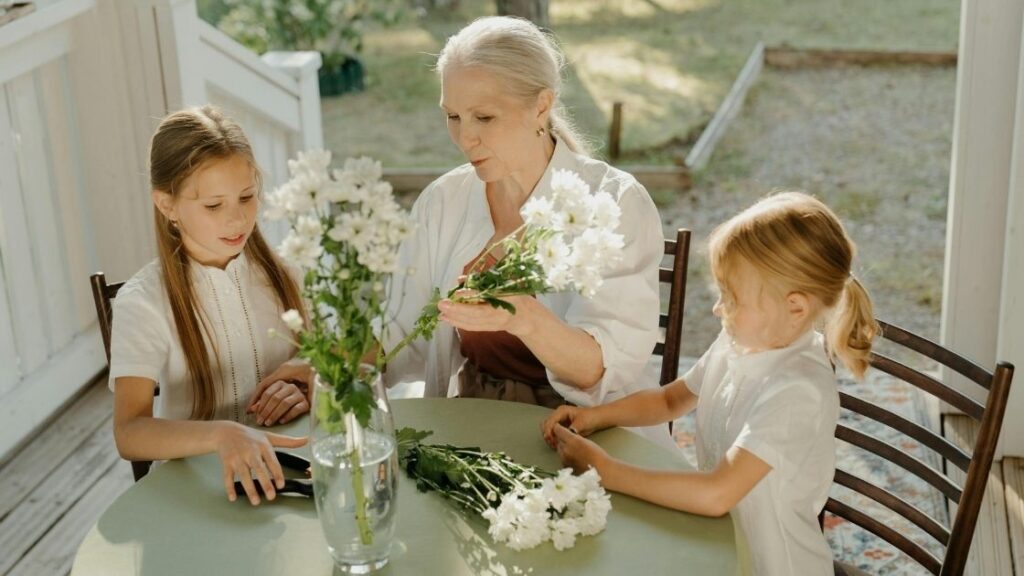
My own grandmother kneaded bread every Friday morning on the same worn wooden board her mother had used before her. She never once called what she was doing “legacy work.” It was simply Friday. Bread. Flour on every surface. Grandchildren underfoot.
Years after she was gone, I realized I was doing the exact same thing in my own kitchen, on a different board, with a niece pulling a stool up beside me. Nothing about the moment was planned. It had simply been handed forward without anyone naming it.
This is how most inherited gifts actually travel between generations. Not through grand declarations. Through ordinary Friday mornings that end up mattering far more than anyone realized at the time.
The Ripple Effect Across Generations
The most remarkable truth about the impact of a grandparent legacy is that it compounds across time.
A value lived in one generation influences decisions three generations later, often without anyone tracing the connection. A grandfather who insisted on honesty shapes a parent who models it, who raises a child who expects honesty in friendships, work, and love. A grandmother who welcomed neighbors shapes a grandchild who builds community decades later in a different city.
That is why choosing to preserve family wisdom, even in small, unglamorous ways, carries such weight. You are not saving objects. You are quietly shaping the emotional climate of a family a hundred years from now.
Conclusion
A grandparent legacy is one of the most generous gifts a family can create, and one of the easiest to let slip away.
It lives in small, unglamorous moments. A Tuesday phone call. A recipe copied by hand. A story told one more time even when everyone has already heard it. Research from Emory University, Boston College, and other respected institutions keeps pointing to the same quiet conclusion, that rootedness matters for mental health, identity, and resilience at every age.
Start this week. Record one story. Scan one photograph. Call one grandparent, or sit beside them if you are lucky enough to still have that option, and ask about a day you have never heard them tell.
If this guide moved you, share it with someone in your family, leave a comment about a tradition you want to keep alive, or try one of the seven practices above tonight. Your grandchildren are already counting on what you choose to remember.
What does grandparent legacy actually mean?
It refers to everything a grandparent passes down to younger generations, both seen and unseen. That includes heirlooms, photographs, and recipes, along with values, humor, faith, and the unwritten rules about how a family treats one another.
Why does preserving family history affect children so deeply?
Research from Emory University’s Family Narratives Lab found that children who know detailed stories about their family tend to show stronger resilience, higher self-esteem, and better emotional regulation. Knowing where you come from gives a child a steady place to stand.
How can grandparents build a meaningful connection from far away?
Distance is easier to close than most families assume. Weekly video calls, short voice notes, shared digital photo albums, and handwritten letters build intergenerational bonds that hold up remarkably well across miles. Consistency matters more than length or formality.
What is a legacy letter or ethical will?
A legacy letter is a non-legal document in which a grandparent records their values, hopes, lessons, and blessings for future generations. Modern hospice and elder care programs often encourage the practice because it supports emotional closure for both the writer and the family.
Does a grandparent legacy require wealth or heirlooms?
Not at all. The most powerful parts of any inheritance are intangible, such as values, stories, humor, and faith. Time, attention, and presence consistently outlast material gifts in shaping who grandchildren become.
How can families honor grandparents after they pass away?
Memorial rituals help families keep a loved one’s memory active in everyday life. Lighting a candle on a birthday, cooking a signature dish on the anniversary, or creating a small photo book for children who never met them helps grief feel less like absence and more like continued presence.