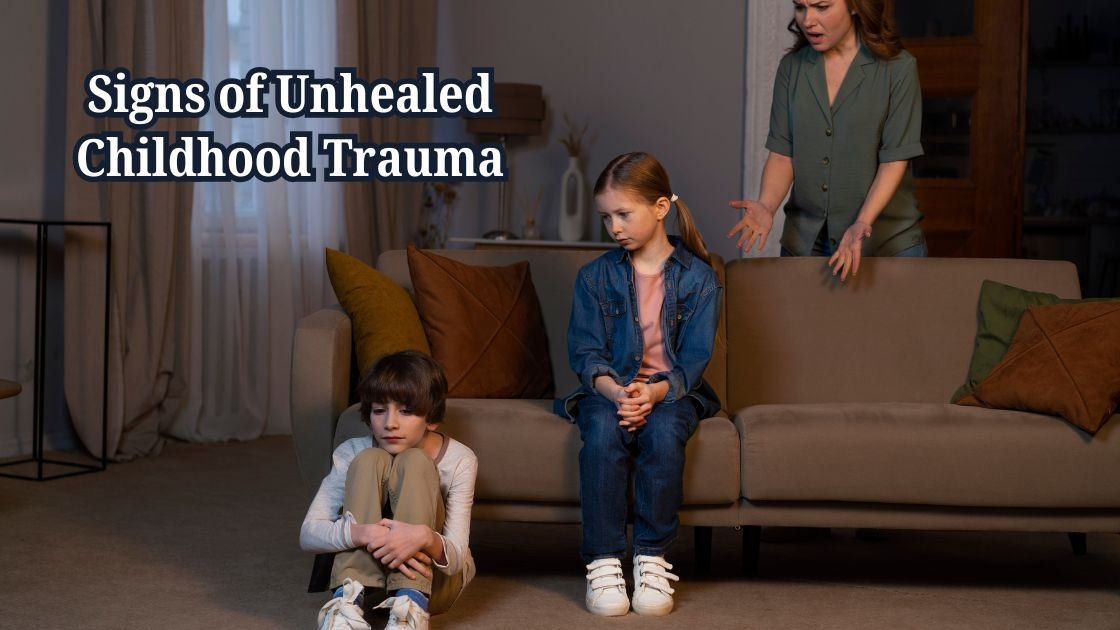
Have you ever wondered why certain emotions feel overwhelming, why trust doesn’t come easy, or why patterns in your relationships keep repeating the answer might lie in the signs of unhealed childhood trauma that silently shape your adult life. What happened to you as a child doesn’t simply disappear when you grow up. Instead, it embeds itself deep within your nervous system, your thought patterns, and your emotional responses, influencing almost everything you do without you even realizing it.
Childhood emotional wounds often go unnoticed because they don’t always look like what we expect. There are no visible scars. Instead, unresolved trauma shows up as people-pleasing, chronic anxiety, difficulty setting boundaries, emotional numbness, or an intense fear of abandonment. These behaviors feel so normal to the person living with them that they rarely connect the dots back to their early experiences.
The truth is, millions of adults carry the weight of adverse childhood experiences without ever understanding the root cause of their struggles. Whether it was emotional neglect, toxic family dynamics, or repeated invalidation during formative years, these experiences leave a lasting imprint on adult behavior and mental health.
In this comprehensive guide, we will walk you through the most common signs of unhealed childhood trauma, help you understand how inner child wounds affect your daily life, and explore the connection between unresolved childhood pain and patterns like self-sabotage, codependency, and emotional dysregulation. More importantly, we’ll discuss practical steps toward trauma recovery and healing.
Understanding these signs is not about placing blame it’s about gaining the awareness you need to finally break free and begin your journey toward emotional freedom.
What Are the Signs of Unhealed Childhood Trauma and Why Do They Matter?
Before diving into the specific signs of unhealed childhood trauma, it’s important to understand what this term actually means. Childhood trauma refers to deeply distressing experiences that occur during your formative years, typically before the age of 18. These can include physical abuse, emotional neglect, witnessing domestic violence, losing a parent, or growing up in a household affected by addiction or mental illness.
When these painful experiences are never properly addressed, processed, or healed, they become unhealed childhood trauma. The emotional wounds stay frozen in time inside your subconscious mind, continuing to influence your thoughts, behaviors, and relationships well into adulthood. You may not consciously remember every event, but your body and nervous system absolutely do.
Why Does Childhood Trauma Go Unhealed?
Many people carry unresolved childhood pain for decades without realizing it. This happens for several reasons. Children often lack the language to express what they’re feeling, and many grow up in environments where emotions are dismissed or punished. In families with generational trauma, dysfunctional patterns are normalized, making it nearly impossible for a child to recognize that something is wrong.
Additionally, society has long minimized the impact of emotional neglect compared to physical abuse. Many adults were told to “get over it” or “stop being so sensitive,” which only pushed their pain deeper underground. Without proper intervention, these unprocessed emotions become the invisible foundation upon which adult behavior is built.
The Most Common Signs of Unhealed Childhood Trauma in Adults
Recognizing the signs of unhealed childhood trauma is the first and most crucial step toward recovery. These signs often disguise themselves as personality traits or habits, making them difficult to identify. Below are the most significant behavioral and emotional patterns linked to childhood emotional wounds.
Emotional and Psychological Signs
The emotional impact of unresolved trauma runs deep. Adults who experienced adverse childhood experiences frequently struggle with emotional regulation and may feel like they are constantly on edge. The signs of unhealed childhood trauma in this area often look like everyday stress, but the intensity and frequency are far greater than what most people experience.
- Chronic anxiety or a persistent feeling of being unsafe even in stable environments, which stems from a hyperactive nervous system shaped by early traumatic stress.
- Difficulty trusting others and an underlying belief that people will eventually hurt or abandon you, rooted in broken childhood attachments.
- Emotional numbness or dissociation where you feel disconnected from your own feelings or body as a protective mechanism developed during childhood.
- Intense fear of rejection that leads to people pleasing, over apologizing, or constantly seeking external validation from others.
- Unexplained feelings of shame or guilt that seem to exist without a clear reason, often connected to internalized messages received during early development.
Behavioral and Relational Signs
The signs of unhealed childhood trauma don’t just live inside your head. They show up in the way you act, the choices you make, and the relationships you build. Many adults unknowingly recreate the same painful dynamics they experienced as children, forming codependent relationships or choosing emotionally unavailable partners.
Self sabotage is another hallmark of unresolved trauma. Just when things start going well in your career, relationship, or personal growth, something inside pulls you back. This isn’t a character flaw. It’s a trauma response. Your subconscious mind equates success and happiness with danger because stability was never safe in your childhood environment.
Difficulty setting healthy boundaries is also extremely common. If your boundaries were violated or ignored as a child, you likely never learned how to establish them. As an adult, this can manifest as saying yes when you mean no, tolerating disrespect, or feeling guilty whenever you prioritize your own needs.
Physical Health Problems: Overlooked Signs of Unhealed Childhood Trauma
What many people don’t realize is that the signs of unhealed childhood trauma extend far beyond emotions and behavior. Research, including the landmark ACE (Adverse Childhood Experiences) Study, has shown a direct link between childhood trauma and chronic physical health conditions in adulthood.
The Body Keeps the Score
When trauma goes unprocessed, the body stores it. Your nervous system remains stuck in a state of fight, flight, or freeze, which over time leads to serious health consequences. Adults carrying unhealed childhood trauma often experience the following physical symptoms.
- Chronic fatigue and sleep disturbances including insomnia, nightmares, or restless sleep caused by an overactive stress response system.
- Unexplained body pain such as headaches, back pain, or stomach issues that have no identifiable medical cause but are directly tied to stored emotional tension.
- Weakened immune system resulting from years of elevated cortisol levels, making you more susceptible to frequent illness and autoimmune conditions.
- Digestive problems like irritable bowel syndrome which research has increasingly connected to early life stress and unresolved emotional trauma.
- Heart related issues because prolonged exposure to stress hormones significantly increases the risk of cardiovascular disease over time.
These physical manifestations are your body’s way of communicating what your mind has tried to suppress. Understanding this connection is essential for anyone seeking holistic trauma recovery.

Breaking the Cycle: Why Recognizing Signs of Unhealed Childhood Trauma Matters
Identifying the signs of unhealed childhood trauma is not about dwelling in the past or assigning blame to your caregivers. It is about understanding the root cause of patterns that have been holding you back and making an empowered choice to heal. Awareness creates the space between your trauma response and your conscious decision, and that space is where transformation begins.
Healing Is Possible at Any Age
It is never too late to address unresolved childhood pain. Whether you are in your twenties or your sixties, the brain possesses remarkable neuroplasticity, meaning it can form new neural pathways and rewrite old patterns. Therapeutic approaches such as EMDR (Eye Movement Desensitization and Reprocessing), somatic experiencing, inner child work, and cognitive behavioral therapy have all shown significant effectiveness in helping adults process and release stored trauma.
The journey of healing the signs of unhealed childhood trauma requires patience, self compassion, and often professional guidance. But with consistent effort, it is entirely possible to move from survival mode into a life defined by emotional freedom, healthier relationships, and genuine inner peace.
Conclusion
Recognizing the signs of unhealed childhood trauma is one of the most powerful and courageous steps you can take toward reclaiming your life. Throughout this article, we explored how childhood emotional wounds silently shape your adult behavior, relationships, mental health, and even your physical wellbeing. From chronic anxiety and trust issues to self sabotage and codependency, these patterns are not personal failures. They are the natural consequences of pain that was never given the space to heal.
Understanding that your struggles have a root cause is incredibly liberating. It means that the way you have been functioning is not a reflection of who you truly are. It is simply the result of a nervous system that learned to survive under difficult circumstances. The signs of unhealed childhood trauma may have defined your past, but they do not have to define your future.
Healing from adverse childhood experiences is not a linear process, and it looks different for everyone. Some may find transformation through therapy, while others begin their journey through self awareness, journaling, or inner child work. What matters most is that you start somewhere. Every small step toward understanding your unresolved childhood pain brings you closer to emotional freedom and healthier connections.
You deserve a life that is no longer controlled by old wounds. By acknowledging the signs of unhealed childhood trauma and choosing to address them with compassion and intention, you are already on the path to becoming the most authentic and healed version of yourself. The past shaped you, but it does not have to hold you back any longer.